
By the end, you’ll know…
- Describe why departure and return are part of the same plan.
- Identify useful questions for a shore briefing.
- Recognise that launches and landings depend on the boat and site.
The sailing part of a lesson does not begin only after the boat leaves shore, and it does not end the moment land is nearby. Preparing, launching or leaving a berth, returning and putting equipment away are all part of the session. Saily likes to think of them as the adventure’s opening and closing chapters. Learn the local plan before trying to write your own ending.
Start with the site and the boat
A dinghy leaving a beach, a training boat using a ramp and a yacht leaving a pontoon have different arrangements. The same hand movement or order of jobs will not suit all three. Your instructor should explain the method for the particular boat, location and conditions, including who does what and where learners should wait.
Australian Sailing’s introductory resources include launching and retrieving as their own topic. That is a useful reminder that shore transitions deserve instruction. Watching a video can make the vocabulary familiar, but it cannot confirm the condition of a real ramp or assign your role on the day.
Agree the whole-session plan
Before leaving, understand the learning area, how the group communicates and how the instructor will call a return. Ask what happens if someone is cold, tired, worried or needs help. A clear answer is more useful than assuming the session will continue until everyone notices the same problem.
Include practical details: where belongings stay, who keeps track of the group and what to do if you lose sight of the instruction you are meant to follow. You are not expected to solve every possibility. You are expected to know how to raise a question and remain within the supervised plan.
People are never buffers
At shore, several things compete for attention: moving boats, equipment, uneven or slippery surfaces and other users. Keep to the position and task your instructor assigns. Do not jump between a moving boat and shore or put a hand or foot between hard surfaces to stop contact. If the gap or movement is confusing, say so rather than trying to rescue the situation physically.
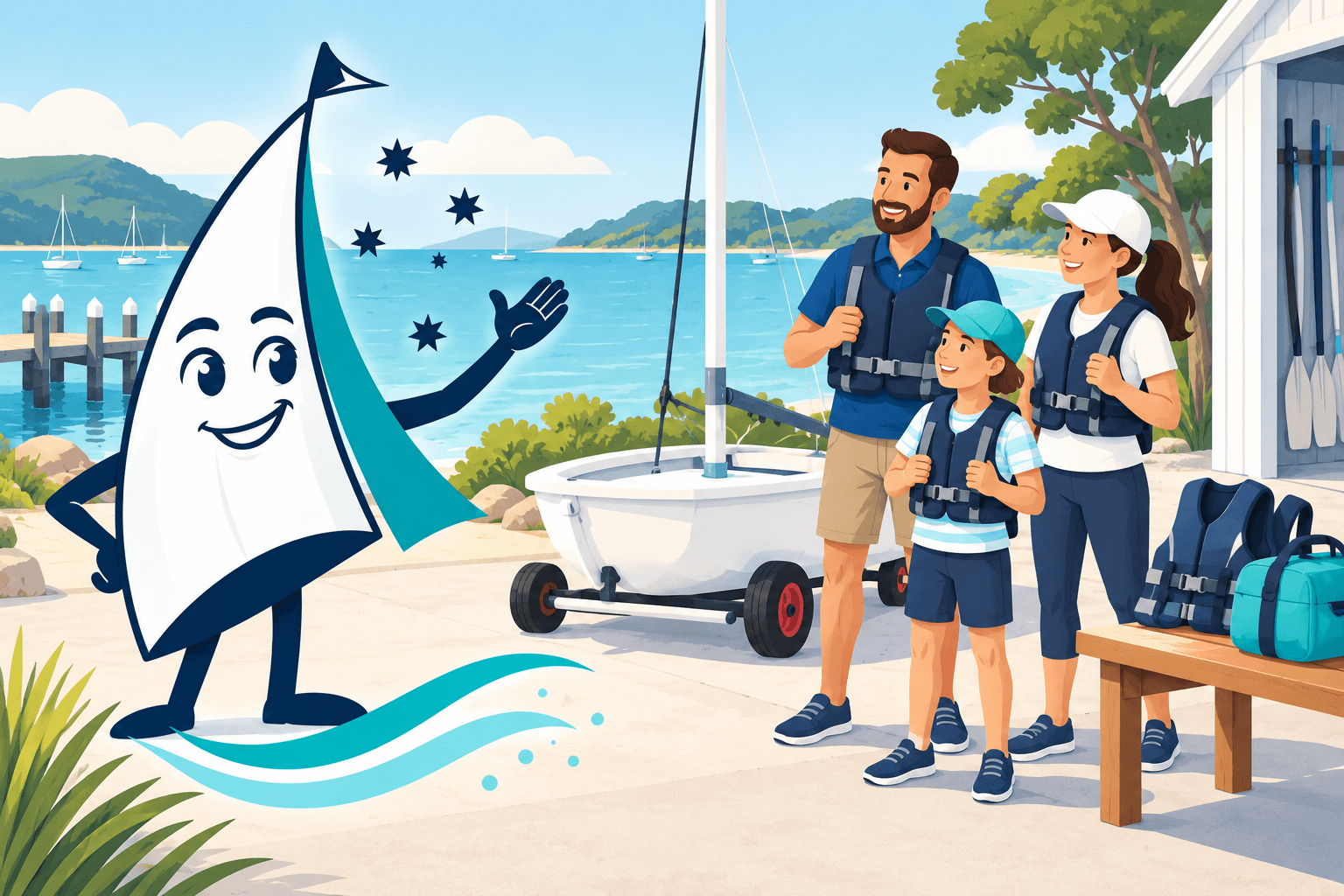
US Sailing’s basic cruising syllabus treats departure and arrival as coordinated helm-and-crew skills. The exact practical method is something to demonstrate and rehearse with suitable supervision, not guess from a cheerful illustration.
The return starts before the landing
Know the agreed return signal and destination before sailing away. Returning is not simply aiming at the nearest visible patch of shore. Conditions, other activity and the instructor’s assessment may alter the plan. Listen for updated instructions and tell the instructor if you missed them. A remembered plan is useful only while it remains the current plan.
After the boat and people are safely ashore or secured, complete the assigned equipment and check-out tasks. Then take a minute for a debrief: what felt clear, what surprised you and what should you practise next? One learner may have enjoyed steering but felt uncertain at the pontoon. That is valuable feedback. The next session can address it directly, making the whole experience more comfortable rather than focusing only on the exciting part afloat.
Design a shore briefing card
- Write three headings: before leaving, while afloat and returning.
- Under each heading, add one question you would ask the instructor.
- Add the sentence “I will tell the instructor if I do not understand my role.”
Show Saily’s thinking
Useful questions include where to wait before launch, how the return signal works and what your assigned job is at the landing. The card prepares a conversation, not a launch procedure.
Three things to take aboard
- Departure and return need site-specific instruction.
- Know the learning area, communication and return plan.
- Keep people clear of trapping gaps and report uncertainty early.

Ready to test your sea sense?
Four questions. No timer. Try again whenever you like.
Still curious?
Can I follow the same launch routine at every club?
No. Boats, sites and local arrangements differ. Learn the current routine from the instructor responsible for that session.
What if I miss the return instruction?
Tell the instructor through the agreed communication method. Do not guess a new landing place or silently follow an uncertain interpretation.
Is packing away part of learning?
Yes. The assigned equipment and check-out tasks help complete the session, while a debrief identifies useful questions for the next lesson.
Keep exploring
These sources support the lesson. Follow your instructor’s boat-specific briefing when you practise afloat.
How we prepare our learning content ↗